Call us now 01926 402 498


Sexual Abuse Statistics UK
The following statistics highlight the scale of the issue in England and Wales.
Sexual Abuse Statistics UK: Facts and Figures
Sexual abuse and sexual violence affect millions of people across the UK. People of all ages, genders, cultures and background are living with profound and lasting consequences of sexual abuse.
Understanding the scale of sexual abuse is essential to raising awareness, challenging misconceptions, improving prevention and ensuring survivors can access the support they need.
At Safeline, we believe that everyone affected by sexual abuse deserves to be heard, believed and supported. These statistics highlight the prevalence of sexual abuse and sexual violence, the barriers survivors face when disclosing their experiences, and the impact abuse can have on people’s lives.
The statistics below draw on research from the Office for National Statistics (ONS), government publications and other recognised sources. We identify the geographical coverage and reporting period for each set of figures, as definitions and research methods can differ.
1 in 4 women
have experienced sexual abuse.
1 in 6 men
have experienced sexual abuse.
1 in 6 children
have experienced sexual abuse.
How common is sexual abuse in the UK?
Sexual abuse and sexual violence are more prevalent than many people realise. However, because so many experiences are never reported, there is no single statistic that captures the full extent of the problem.
Only 1 in 6 victims (17%) of sexual abuse ever report their experiences to the police. Reasons given include fear of not being believed, self-blame, humiliation, and embarrassment. (Crime Survey for England and Wales 2020).
Broken down by gender, 3 in 4 men and 4 in 5 women do not report their experiences of sexual abuse to the police. As a result of the discomfort towards reporting, statistics underestimate the prevalence of sexual abuse in England & Wales.
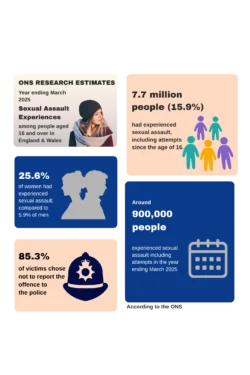
The Crime Survey for England and Wales 2025 estimated from the people who responded that:
- 7.7 million people (15.9%) aged 16 and over in England and Wales had experienced sexual assault, including attempts, since the age of 16.
- 25.6% of women had experienced sexual assault, including attempts, since the age of 16, compared with 5.9% of men.
- Around 900,000 people aged 16 and over experienced sexual assault, including attempts, in the year ending March 2025.
These figures demonstrate the widespread nature of sexual violence.
How many sexual assaults are reported to the Police?
Sexual abuse and sexual violence are significantly under-reported. Many survivors never tell anyone about what happened, while others may disclose their experiences to friends, family members or support organisations without making a formal police report.
There are many reasons why someone might not report sexual abuse, including:
- Fear of not being believed.
- Shame, embarrassment or humiliation.
- Self-blame and feelings of guilt.
- Fear of the perpetrator or the consequences of reporting.
- Worry about the criminal justice process.
- Not feeling ready to talk about what happened.
- Previous negative experiences when seeking help.
The ONS found that, among people who had experienced rape or assault by penetration, including attempts, since the age of 16, approximately 14.7% had reported their most recent assault to the police.
Research into childhood sexual abuse also highlights the difficulties survivors can face when disclosing their experiences.
The ONS’ Crime Survey (year ending March 2025) and Abuse During Childhood findings show that:
- Only 43.1% of people who had experienced sexual abuse during childhood said they had disclosed it at the time.
- 67% said they had told someone about their experiences at some point.
- The most common reasons for not disclosing at the time included embarrassment, humiliation or shame (49.1%), not thinking they would be believed (27.1%) and thinking it was their fault (25.9%).
These findings demonstrate why police-recorded crime figures cannot provide a complete picture of sexual abuse and why creating safe environments for disclosure is so important.
Police recorded sexual offences by offence type
“CSA” stands for Child Sexual Abuse.
Source: Office for National Statistics| Year ending | Rape Cases | Sexual Assault Cases | CSA* Cases |
|---|---|---|---|
| March 2025 | 71,540 | 77,659 | 20,091 |
| March 2024 | 67,828 | 74,505 | 20,632 |
| March 2023 | 68,884 | 78,140 | 24,402 |
| March 2022 | 69,905 | 75,023 | 24,419 |
| March 2021 | 55,652 | 49,844 | 22,260 |
| March 2020 | 59,104 | 58,796 | 24,536 |
| March 2019 | 59,921 | 59,509 | 25,126 |
| March 2018 | 55,004 | 56,057 | 23,563 |



Sexual Abuse and Mental Health
Sexual abuse can have a profound impact on a person’s mental health, emotional wellbeing and ability to feel safe.
Every survivor responds differently. Some people experience immediate psychological difficulties, while others may experience the effects years or even decades later.
The impact can include:
- Post-traumatic stress disorder (PTSD). 94% of rape or sexual assault survivors develop symptoms of PTSD in the first two weeks after the event. (PTSD UK)
- Self Harm. 74% of under 18s who attend our Prevention & Early Intervention services have self-harmed.
- Eating Disorders and difficulties with body image. 15% of people suffering with eating disorders have experienced sexual abuse.
- Suicidal Ideation: 80% of clients accessing Safeline’s services present with suicidal ideation.
- Anxiety and depression
- Difficulties with trust and relationships
- Problems with sleep, concentration and everyday functioning
- Feelings of shame, guilt and self-blame
The effects of sexual abuse are not limited to mental health. Survivors may also experience physical health difficulties, challenges in education or employment, relationship difficulties and financial insecurity.
There is no single way to respond to sexual abuse. Some survivors experience several of these difficulties, while others do not. Support should always be tailored to the individual.
Why we need accurate sexual abuse statistics
Sexual abuse statistics help us understand the scale of the problem, identify gaps in support and challenge the myths and misconceptions that surround sexual violence.
They are important for several reasons:
- Raising awareness: Reliable statistics help demonstrate that sexual abuse is a widespread issue affecting people across society.
- Challenging misconceptions: Research can challenge harmful assumptions about who experiences sexual abuse, who perpetrates it and why survivors may not disclose.
- Improving prevention: Understanding the prevalence and circumstances of abuse can help inform education, safeguarding and prevention programmes.
- Influencing policy and funding: Evidence helps demonstrate the need for specialist services, appropriate funding and better responses to sexual violence.
- Supporting survivors: Sharing accurate information can help people recognise their experiences, understand that they are not alone and find appropriate support.
Statistics can never tell the whole story. Behind every figure is a person whose experience deserves to be heard and taken seriously.