Call us now 01926 402 498

Victims’ Voice Forum: Learning directly from survivors
Four victim/survivors of sexual abuse spoke directly to professionals from across Warwickshire’s criminal justice and support services. Their experiences challenged assumptions, prompted reflection, and inspired practical changes.
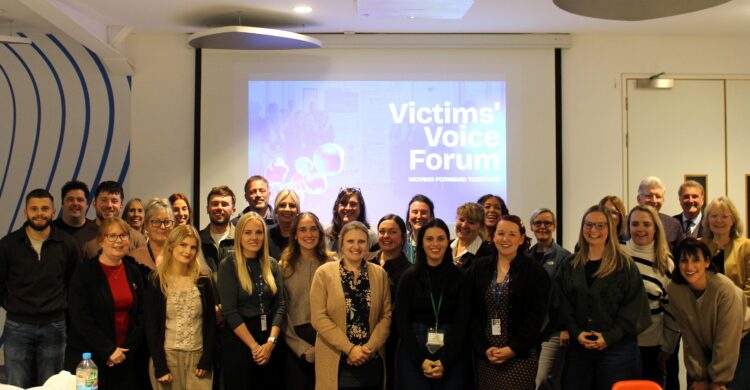
On 9 November 2026, professionals from across Warwickshire’s criminal justice and support services came together for Safeline’s latest Victims’ Voice Forum.
Seco provided the venue for the day, bringing together representatives from Warwickshire Police, the Crown Prosecution Service, call handlers, first responders, and victim support professionals. Their role during the forum was straightforward: listen.
Four people affected by sexual abuse spoke openly about their experiences of reporting, seeking support, navigating investigations, and living with the consequences long after the abuse itself had ended.
What is the Warwickshire Victims’ Voice Forum?
Safeline created the forum in partnership with Warwickshire Police because victim experiences do not fit neatly into spreadsheets.
Services gather large amounts of information through surveys, case reviews, and performance data. Those processes can identify trends and measure outcomes, but they rarely capture what it actually feels like to move through the criminal justice system as a victim of sexual abuse.
The forum creates an opportunity for professionals to hear those experiences directly and ask questions they would not normally be able to ask.
The aim is not criticism.
The aim is understanding.
“Stories are sticky”
Safeline’s Head of Independent Sexual Violence Advocacy opened the forum with a reminder about the value of lived experience:
“Stories are sticky and the stories you hear today will stay with you longer than any statistic or study. The stories heard today are about a collective system. Helping us to reflect on what could we have done better, what change needs to happen today not tomorrow, and where are victims’ getting retraumatised.”
That sentiment remained present throughout the day.
The speakers talked about delays, communication, reporting, family responses, cultural expectations, support services, and the practical reality of trying to pursue justice while continuing to live everyday life.
Their experiences revealed how easily trust can be strengthened or damaged through small interactions that professionals may barely remember but victims never forget.
Communication shapes trust
One speaker focused on the lasting impact of a case closure and the way it had been communicated.
The discussion explored something professionals do every day: explaining difficult decisions.
Victims may remember a decision for years. They also remember how someone explained it.
One attendee wrote:
“Every time I stop a case, I will ALWAYS think of [SPEAKER]. Her voice will remain in my head, as I write to the victim & explain why I have stopped a case.”
Another reflected:
“My use of words in explaining the reasons I am stopping a case will reflect the lack of evidence, NOT based on a disbelief of a victim.”
Those comments highlighted an issue that appeared repeatedly throughout the day. Victims often leave processes carrying unanswered questions. Clear communication helps people understand what has happened, even when the outcome is disappointing.
Looking beyond the reported crime
One speaker reflected on cultural attitudes and expectations that can prevent people from seeking help or disclosing abuse.
They said:
“Safeguarding is dangerous. You are safest around your perpetrator. You are a bad woman, a bad wife, if you speak out.”
Their testimony prompted attendees to think about the wider realities victims can face alongside abuse.
People may worry about housing, finances, family relationships, children, community reactions, personal safety, or the consequences of reporting. These pressures can shape decisions about whether to seek support, report abuse, or continue with a criminal justice process.
Several attendees recognised the importance of understanding the wider context surrounding a victim’s life.
One wrote:
“[Speaker] helped me understand that at the heart of every decision I make there is a human who just wants help/answers.”
Another reflected:
“That there is more to the person than what they are reporting. They may be reacting to police/other services because of more than what we are aware of.”
Understanding the experiences behind the behaviour
Several speakers encouraged attendees to think about how trauma can shape the way victims engage with services.
One discussion focused on neurodivergence and the ways it can overlap with trauma responses. Attendees reflected on the importance of recognising that communication styles, emotional responses, memory, and engagement with services may be influenced by both.
Behaviour that appears unusual, inconsistent, or difficult to understand may have roots in trauma, neurodivergence, or a combination of both. Attendees identified this as an area where greater understanding could improve victim experiences and strengthen professional responses.
One of the key learning points captured from the day was:
“Neurodiversity can overlap with trauma responses, and services need to account for it.”
What attendees took away
The speakers did not present solutions or recommendations. They shared experiences. Yet those experiences prompted attendees to think critically about their own roles and responsibilities.
Several participants left the forum identifying specific changes they would make in their day-to-day work. These ranged from reviewing how decisions are communicated to victims through to providing clearer explanations of criminal justice processes and ensuring people understand what options are available to them at different stages.
One attended reflected on the importance of continuing communication, even when there is little progress to report:
“Consider how impactful an update is to the victim even if there is no update to provide.”
Others committed to changing how they explain outcomes and decisions:
“Ensuring victims have more informative updates and explaining items such as CPS action plans when perhaps previously believing they wouldn’t want to know the minor details.”
The value of the forum came from more than hearing difficult experiences. It came from creating an environment where professionals could reflect on those experiences and leave with a clearer understanding of how their actions affect the people they support.
The impact of the forum
Attendees reinforced the value of bringing survivor voices directly into professional learning and development.
- 100% said they would attend a future forum or recommend it to a colleague.
- 95% rated the forum as very valuable. The remainder rated it valuable.
- 95% felt prepared and supported throughout the day.
- 95% felt the forum was respectful and emotionally safe.
- 74% said the event changed their perspective.
The longer-term impact will appear in conversations, investigations, referrals, updates, and decisions made after attendees return to their day-to-day roles.
Safeline created the Victims’ Voice Forum to ensure victims experiences continue to influence services long after a case closes.
Victim voices do not stop mattering when contact with a service ends.
They help shape what happens next.
Stay up to date with Safeline’s work by following us on Social Media: