Call us now 01926 402 498

Online Slang Explained for Parents and Professionals
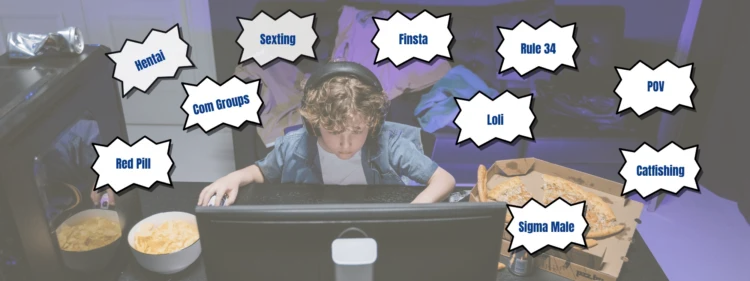
This resource explains the online language, internet terms and social media slang that parents, carers, teachers and safeguarding professionals may encounter when supporting young people.
How familiar are you with the language young people encounter online?
Young people are growing up in a digital world filled with constantly evolving language, trends and online communities. Terms that are unfamiliar to parents, teachers and safeguarding professionals can provide important clues about a young person’s online experiences, interests and potential exposure to harmful content.
Understanding online language is not about keeping up with every trend. It is about recognising words and phrases that may indicate safeguarding concerns, harmful online influences, sexual content, exploitation, extremist ideologies, bullying or other risks.
Some terms may be harmless parts of internet culture, while others can be linked to concerning behaviours, harmful attitudes or inappropriate content. Knowing what these terms mean can help adults start informed conversations, identify potential concerns and better support children and young people.
Awareness of these phrases can help parents and professionals understand references to inappropriate or adult content that children may see or discuss online. Safeline’s Prevention and Early Intervention pages provide more information on our services.
Sexual Content & Online Pornography
Hentai
Hentai, a popular form of animated pornography, often depicts sexual violence, child-like characters, and abusive scenarios. For UK professionals, understanding its risks is crucial. Learn what Hentai is, why young people may encounter it online, and the safeguarding concerns associated with animated sexual content.
Loli
Loli / Lolicon: Terms used in some anime and manga communities to describe child-like female characters and content that sexualises them. Their use may indicate exposure to harmful or age-inappropriate online material.
Rule 34
An internet phrase based on the idea that if something exists, someone has likely created pornographic or sexualised content about it online. Young people may encounter the term on social media, gaming platforms, forums, or in online conversations. The term is often used jokingly online, but it can lead young people towards explicit content that may be harmful, disturbing, or age-inappropriate. It can also be used to normalise the sexualisation of characters, celebrities, or fictional content.
Pornography and young people
Sexually explicit content that young people may encounter online. Exposure can affect their understanding of relationships, consent, and healthy sexual behaviour.
Sexting
Sexting is when someone sends a sexually explicit message (image, video, or words) to another person via a mobile phone, computer, or tablet. The Protection of Children Act 1978 states that it is an immediate offence to obtain, possess or share indecent images of anyone under the age of 18 even if the images were received with the consent of the young person involved.
Find out more: Sexting – Safeline
Online Communities and Influences
Young people spend increasing amounts of time connecting, sharing ideas, and seeking advice online. While many online communities provide support, friendship, and a sense of belonging, others can promote harmful attitudes, risky behaviours, misinformation, or exploitation.
Understanding the language, trends, and communities that young people engage with can help parents, carers, teachers, and safeguarding professionals identify potential risks and start informed conversations. Awareness does not mean every online interaction is harmful, but it can help adults recognise when a young person may be exposed to concerning content or influences.
The following terms and communities are some of the most commonly encountered online and may have safeguarding relevance.
Incel
A term associated with a mostly online subculture of people, who define themselves as unable to find a romantic or sexual partner despite desiring one, and who may blame, objectify and denigrate women and girls as a result.
Manosphere
A collection of online communities focused on masculinity, relationships, and gender roles. Some spaces promote harmful stereotypes and hostility towards women.
Red Pill
Red Pill is a term used within some online communities to describe the belief that a person has “woken up” to what they see as hidden truths about society, gender, and relationships. The concept is commonly associated with the manosphere, a network of online groups focused on masculinity, dating, and gender roles.
Supporters of red pill ideology often argue that men are disadvantaged in modern society, that traditional gender roles are preferable, and that understanding these ideas can help men become more successful in relationships. Some content encourages men to adopt manipulative tactics to gain power, status, or sexual relationships.
While not all red pill content is extremist, some online communities promote misogynistic attitudes, hostility towards women, and harmful stereotypes about gender and relationships. The term is also used by some influencers, manosphere groups, and, in some cases, far-right communities.
Sigma Male
An internet stereotype portraying a man as independent, self-reliant, and successful outside traditional social hierarchies. Sometimes linked to manosphere content.While many references to sigma males are intended as humour or self-improvement content, some narratives can promote unhealthy ideas about masculinity. These may encourage dominance, emotional suppression, self-isolation, or the belief that men should avoid vulnerability and seek control in relationships. In some cases, sigma male content overlaps with manosphere communities that promote harmful gender stereotypes and negative attitudes towards women.
Looksmaxxing
Looksmaxxing is the practice of trying to improve physical appearance through grooming, fitness, cosmetic procedures, or extreme measures such as bone smashing to increase attractiveness.
Com Groups
Short for “communication groups”, these private online messaging groups often operate on platforms such as Telegram, Discord, Snapchat, or WhatsApp. While many are harmless, some can expose young people to harmful content, exploitation, misogyny, pornography, self-harm discussions, criminal activity, or other safeguarding risks.
POV
POV stands for “Point of View.” On platforms such as TikTok, Instagram, YouTube and Snapchat, it is used to show content from a particular person’s perspective or experience. POV videos are often used for storytelling, humour, roleplay, education, or sharing personal experiences.
Examples include:
POV: Your friend ignores your messages.
POV: A teacher catches you using your phone in class.
Why Can POV Content Be a Safeguarding Risk?
Most POV content is harmless entertainment. However, some creators use the format to normalise or romanticise unhealthy situations, making potentially harmful messages appear relatable or attractive:
- Sexual content presented as normal experiences or relationships.
- Grooming behaviours disguised as romantic scenarios.
- Abusive or controlling relationships portrayed as desirable.
- Self-harm, eating disorders or risky behaviour being normalised.
- Misogynistic or extremist views presented through relatable characters.
- Misinformation that can influence attitudes, beliefs or behaviours.
Because POV content encourages viewers to imagine themselves in the situation, it can be more emotionally engaging and influential than traditional posts.
Finsta
Finsta is short for “fake Instagram”. It refers to a secondary Instagram account, often used by young people to share content with a small group of trusted friends rather than a wider audience.
Unlike a person’s main account, a finsta may contain:
- More personal thoughts and feelings
- Unfiltered photos or videos
- Inside jokes between friends
- Content they do not want parents, teachers, or a wider audience to see
Having a finsta is not necessarily harmful. Many young people use them simply for privacy and self-expression. However, because these accounts are often less visible to parents and carers, they can sometimes be used to:
- Share risky or inappropriate content
- Engage in cyberbullying
- Discuss mental health concerns
- Communicate with people outside a young person’s usual friendship group
- Share images or information they would not post publicly
Catfishing
Catfishing is when someone creates a fake online identity to deceive others. While not all catfishing is malicious, it can be linked to grooming, exploitation, fraud, and other safeguarding concerns. Catfishing may involve using fake names, stolen photographs, edited images, or misleading personal information to make someone believe they are communicating with a different person.
While some people catfish as a prank or to gain attention, it can also be used to:
- Groom children and young people
- Manipulate or exploit vulnerable individuals
- Obtain sexual images or personal information
- Commit financial fraud or scams
- Build trust before carrying out abuse or exploitation
- Harass, bully, or emotionally harm others
Young people may be particularly vulnerable if they believe they are communicating with someone of a similar age who is actually an adult.
Signs that someone may be catfishing include:
- Refusing to video call or meet in person
- Providing inconsistent information about themselves
- Using images that appear professional or heavily edited
- Quickly developing intense emotional relationships online
- Asking for money, gifts, personal information, or intimate images
- Encouraging young people to think critically about online relationships and to speak to a trusted adult if something feels wrong can help reduce risks.
Ghosting
Ghosting is when someone abruptly ends communication without explanation. While common in online interactions, it can negatively affect a young person’s wellbeing and may sometimes be linked to unhealthy relationship dynamics.
Ghosting can sometimes:
- Cause distress, anxiety, or confusion, particularly for young people.
- Affect self-esteem and confidence.
- Be used as a form of emotional manipulation or control.
- Occur as part of unhealthy or abusive relationships.
- Leave young people vulnerable if they seek support from unsafe online sources.
For some young people, repeated experiences of rejection or exclusion online can have a significant impact on their emotional wellbeing.
Ratio
A social media term used when a reply, comment, or response receives more engagement than the original post, often indicating widespread disagreement or criticism.
Being “ratioed” is often seen as a sign that others disagree with, criticise, or mock the original content.
Example:
“That post got ratioed.”
This means the responses to the post were more popular than the original post itself.
Understanding terms like ratio can help parents and professionals recognise when young people may be experiencing online criticism, embarrassment, cyberbullying, or social pressure. Being publicly “ratioed” can have a negative impact on confidence and wellbeing.

Gaming and Online Platforms
Gaming and online platforms play a significant role in the lives of many children and young people. While these spaces can offer opportunities for learning, creativity, social connection and entertainment, they can also expose users to risks such as inappropriate content, harmful online behaviour, exploitation and grooming. Understanding the language, features and communities associated with popular platforms can help parents, carers and professionals support young people to stay safe online.
Grooming in gaming spaces
Grooming in gaming spaces is when an individual uses online games, gaming platforms, or gaming communities to build trust with a child or young person for the purpose of manipulation, exploitation, or abuse. Many games allow players to communicate through text chat, voice chat, private messaging, livestreams, and online communities. While most interactions are harmless, these features can be exploited by those seeking to target young people.
People who groom children often look for opportunities to:
- Build trust and friendship over time.
- Isolate a young person from friends and family.
- Gather personal information.
- Encourage secrecy.
- Manipulate or pressure a young person into sharing images, videos, or personal details.
- Arrange contact outside the gaming platform.
Why can gaming spaces be a safeguarding risk?
People who groom children often look for opportunities to:
- Build trust and friendship over time.
- Isolate a young person from friends and family.
- Gather personal information.
- Encourage secrecy.
- Manipulate or pressure a young person into sharing images, videos, or personal details.
- Arrange contact outside the gaming platform.
Grooming can happen gradually and may initially appear as a genuine friendship.
Warning signs
A young person may be at risk if they:
- Become secretive about who they are talking to online.
- Receive gifts, in-game currency, or rewards from unknown individuals.
- Spend increasing amounts of time communicating with a particular online contact.
- Move conversations from games to private messaging apps or social media.
- Become distressed when unable to access a game or speak to a specific online friend.
- Talk about an online friend they have never met in person.
Most people who play online games are not a risk to children. Gaming can provide valuable opportunities for friendship, teamwork, creativity, and learning. However, it is important to:
- Encourage open conversations about online gaming.
- Help young people understand privacy settings and online safety.
- Remind them never to share personal information with people they only know online.
- Create an environment where they feel comfortable reporting concerns.
- Take any disclosures of grooming or exploitation seriously.
Discord
Discord is a messaging platform that allows users to chat via text, voice and video. Popular with gamers and online communities, it can be a positive space for connection but may also expose young people to inappropriate content, bullying, exploitation or grooming.
Private messaging, anonymous users and large community servers can make it easier for harmful interactions to occur, so young people should be encouraged to use privacy settings and report concerns.
Roblox
Roblox is an online gaming platform where users can play games created by others and design their own experiences. It is especially popular with children and young people and includes social features such as messaging and in-game communication.
While Roblox has safety features in place, children may still encounter inappropriate content, scams, or unwanted contact from other users, making parental supervision and online safety conversations important.
Minecraft
Minecraft is a sandbox game that allows players to build, explore and create virtual worlds. Players can play alone or interact with others on multiplayer servers, some of which may be public and require appropriate safety settings.
Public multiplayer servers can expose young people to inappropriate language, harmful content or contact from strangers, so it is important to review server settings and discuss safe online behaviour.
Staying Informed About Online Language
Online slang, trends and communities are constantly evolving. While many words and phrases are harmless, some can indicate exposure to harmful content, online exploitation, misogynistic ideologies, pornography, cyberbullying, or other safeguarding concerns. Understanding the language young people use online can help parents, carers, teachers and professionals start informed conversations, recognise potential risks, and provide support when needed.
It is not necessary to keep up with every online trend. Instead, focus on maintaining open communication, encouraging critical thinking, and creating opportunities for young people to talk about their online experiences. By understanding online slang, internet culture and social media terminology, adults can play an important role in helping children and young people stay safe online.